| Maximum Volume: | 12in x 12in x 5in (Depth is limited by cutting bit length) |
| Minimum Resolution: | 0.00015 inches (Depends on cutting bit size and flex) |
| Maximum Speed: | 9.6 seconds/inch (Depends on material being cut) |
| Limit Sensors: | X,Y,Z Upper and Lower (With auto shutoff) |
| Platform: | GUI runs on both Linux and Windows |
| Protocol: | Standard 9-pin RS-232 serial port |
| Number of Axis: | 3 - X,Y,Z (Some mills have more) |
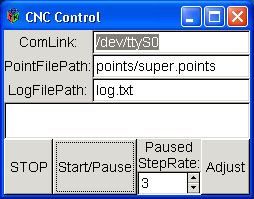
The Main Control window for the CNC system.
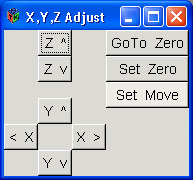
The window you get when you press Adjust on the Main Control window.
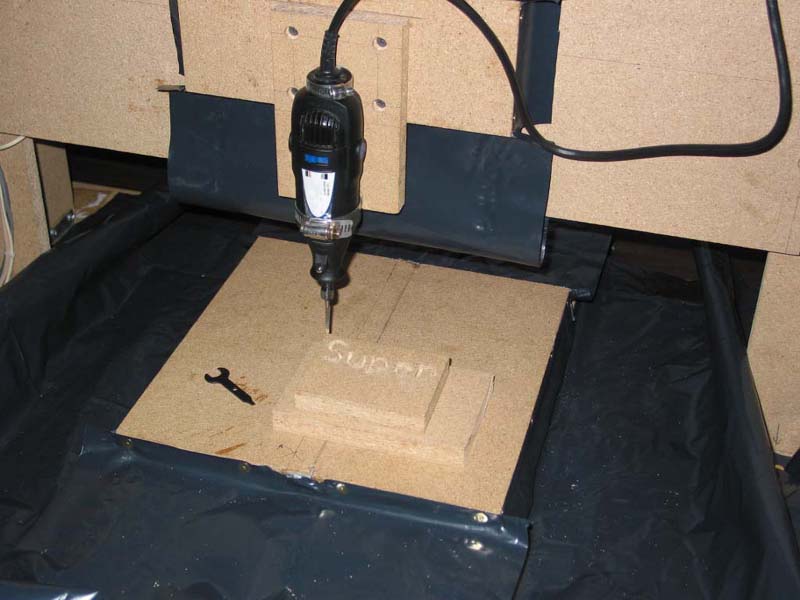
The mill cutting the word SUPER into a block of wood.
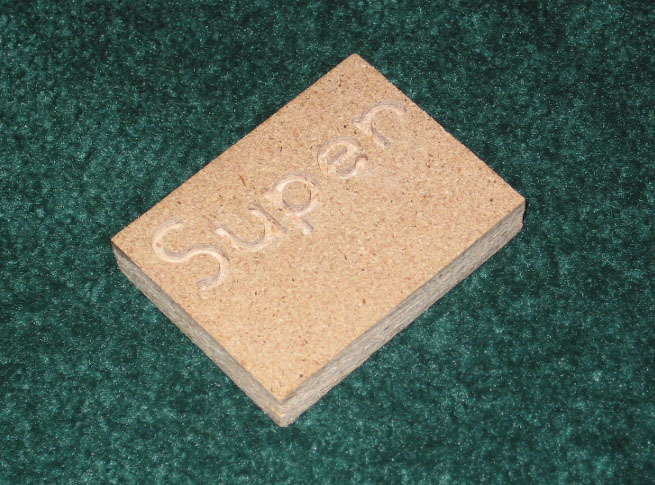
Close up view of the word SUPER cut into a block of wood.
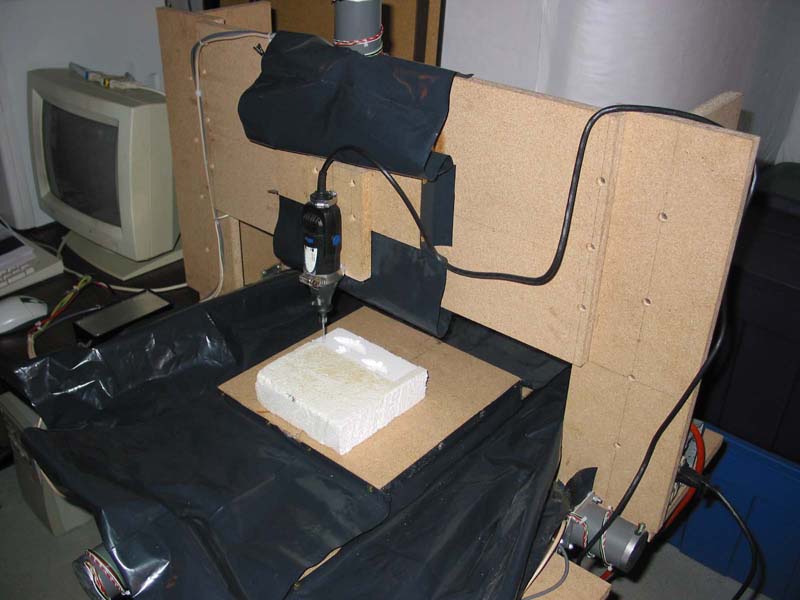
The mill cutting a sample 3D range image into a block of foam.

The original scene used to generate the sample 3D range image.

The sample 3D range image.

Inverted verson of the sample 3D range image.
I have condensed all of the designs I've seen into these categories...
Rotating motion to linear motion:
Belt (Timing belts; Found in most desktop printers)
+ Good for short distances.
+ Easy to find in old printers.
- Hard to find long belts.
- Can stretch over time or with excess force.
Screw (Found in most hobby CNC machines)
+ Good for medium distances.
+ Easy to visualize.
+ Easy to find in hardware stores.
- Hard to find long screws.
- Adds inertia to spinning parts.
- Alignment with the nut is critical.
Rack
+ Good for long distances.
+ Can easily make longer by adding more lengths.
- Hard to find in local parts stores.
- Alignment with the gear is critical.
Reducing friction and guiding the position:
Slide (No Bearings; One material slides on another.)
+ Easy to find low-cost parts.
- Larger motors to overcome friction.
Inside Track (Bearings ride on inside of shaped channel.)
+ Great for custom and small designs.
- Difficult to find or build matching tracks and "shuttles".
Outside Track (Bearings ride on outside of round or square tube.)
+ Easy to find low-cost parts.
- Requires more than one tube/track for stability.
* Square tubes are generally more stable than round tubes.
* Round tubes generally require less bearings.
Servo vs. Stepper Motors:
Stepper
+ Low cost H-bridge type driver.
- Higher cost for higher torque.
* Typically no feedback sensors required.
* Typically no real-time controller required.
Servo
+ Faster response times.
+ Lower cost for higher torque.
- Requires feedback sensor.
- Requires real-time controller.
I would build a small sized machine with:
Screws or Belts.
Stepper motors.
Slides.
I would build a medium sized machine with:
Screws or Racks.
Servo or Stepper motors.
Outside Tracks (Square).
I would build a large sized machine with:
Racks.
Servo motors.
Outside Tracks (Square).
Note: Wider and more contact points == More stable/accurate movement.
Note: Less mass/weight == Less required motor torque.
Note: Less friction == Less required motor torque.
Note: Try to move the cutter not the work.